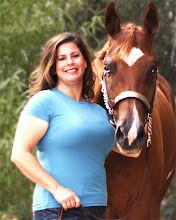
Recently, I posted Part I, with the answers I give to the most frequently asked questions from those considering becoming an equine appraiser. If you love and are knowledgable about horses, are well written, well spoken, and willing to run a professional business, being an equine appraiser may be a lot of fun for you.
As promised, this is about a "day in the life" of an equine appraiser. I am a lifetime certified equine appraiser and have been studying horse values for over a decade. I thought those interested in the profession might find value in a typical day.
Recently, I appraised a 10 year old Warmblood gelding that had been donated to a non-profit. We'll call him "Casey."
Monday 5:30 AM - 6:30 AM
For the first hour, I review emails and return inquiries. If the inquiry comes from the East coast, which is three hours ahead, now is the perfect time to return phone calls. Otherwise, I will respond via email. Lastly, I take one last look at all the submitted materials about "Casey," his ownership and vet history, his show record and training experiences, to be most prepared to see him in person later today.
I also make a plan about the rest of the day. Do I have fresh batteries in the camera? Is the video camera charged? Are my business cards and brochures stocked? Who else do I need to follow up with?
Monday 6:30 - 10 AM
I drive to the on-site inspection.
I make good use of the travel time following up on other appraisal projects. I had three in the works on this particular day, so I made calls to an attorney, a performance horse association, and a veterinarian, to request various records or ask questions about their client's horses. Of course, I am doing this hands-free and asking them to fax or email their responses, so I am not trying to take notes. I may pull over and jot down a lead or tip (like the name of a prior owner not listed on a horse's registration certificate) so I can follow up on it when I am back in the office.
During the drive, I mentally prepare for the questions I need to ask and how I will handle any unique circumstances, like a facility without a suitable riding arena. I have had the benefit of seeing several show videos of Casey, so I have an opinion about what kind of horse he is before I even get out of the car.
Monday 10:00 AM - 11:00 AM
Being professional means being on time; I never want to have my clients waiting for me. I arrive at the non-profit facility a few minutes early. I get my paperwork out, make sure I have everything I need on my clip board, and walk to the barn. I introduce myself, and hand my business card to the trainer. She will be assisting me during the on-site inspection.
10:00 - 10:20
I watch Casey be led out of his stall to the grooming area. I observe his walk for the footfall, and also begin to assess his conformation. This is a lot like judging Halter, but I am evaluating Casey's build against the Warmblood breed standards and against the most appropriate structures to perform his particular discipline, which is jumping.
My first impression is that Casey is a handsome horse that looks like he's always had a job - there are some lumps and bumps on his legs, but he's in great physical condition and has very good eye-appeal. A potential buyer would like him! During this time, I am making notes about Casey's build, and mentally keeping track of things that I want to observe when he moves (at liberty and under saddle). For instance, Casey toes out slightly, so I would like to see if that translates into winging or paddling when he moves.
I also observe his attitude and manners. Does he stand tied? Are there any places on his body that he reacts to while being groomed or tacked up? Would a novice feel comfortable and be safe handling this horse? Not every horse is beginner friendly, and the market for "experienced handlers" is considerably smaller than the one for horses that anyone can handle.
After my initial review, the trainer takes Casey out to a level, grassy area. I keep watching his movement and attitude. Then she poses him for pictures. In addition to validating my impressions about his conformation, the pictures document the specific horse I saw. This helps to confirm registration, reported markings, brands, and other unique characteristics.
This is a very detail oriented job.
10:20 - 10:35
Casey is taken to the arena. Being an appraiser, I am an observer. I stand back and watch a lot. First, I want to make sure he is servicably sound and to examine the quality of his movement. Then I am looking to see how adjustable, broke and easy to ride Casey is. This helps me identify the type of buyer for which he would be most suitable. And, that helps me determine his place in the overall show horse market.
The trainer works Casey at the walk, trot and canter, around the ring and across the diagonals. I don't want to interfere, but I also have certain things that I need to see. I ask to see some equitation test elements like halt and reinback, counter canter, and sitting and extended trots. She shows me a few flying changes, too.
Overall, Casey seems happy and quiet in his work. He's actually much softer and more quiet than I expected from the show videos. He seems a little bracey in his jaw and doesn't want to flex at the poll. I consider the tack and ask the trainer about the bit. I also explain what I observe and ask for her feedback to help develop my opinions.
10:35 - 10:50
Now that Casey is warmed up, the trainer is ready to jump him. We set a few fences. I take a couple of photos and a little video during this portion so I can make sure what I think I see as his jumping style is really his true form. The way a horse jumps is an indication of athletic ability, training, and suitability to the various divisions. In very basic terms, a Hunter should be round, a Jumper should be efficient, an Equitation horse will probably jump a little flat and be pretty adjustable.
We build up to a few lines, an oxer, a vertical. Casey is happy to jump, and gets the distances (even though the arena is small and I set one line a little long). He needs a little help balancing in the corner, so I know he's not a rank beginner's horse. His jumping form is efficient, though not especially stylish, comfirming that the Jumper division is a really good fit for him.
10:50 - 11:00
Casey walks a few rounds to cool out and then we head back to the grooming area. I continue to observe him. Is he taking the same steps now that he did before working out? Yup! No issues with work. Is he well behaved to be unsaddled? How does his back look? I ask a few more questions about his daily care, feeding and routines. I think I now have a clearer picture of Casey. After a few more notes, I thank the trainer and staff, then leave the facility.
Monday 11:00 - 2:00 PM
I start driving back to the office. I call one of the other appraisers in my firm and ask her to get USEF records for Casey. I provide the USEF number and ownership details that I got during my discussions with the trainer this morning. I share my observations of Casey and ask her to start pulling sales comparables. It's great to have partners!
Monday 3:00 - 5:00 PM
After a on-the-road lunch, I am back in the office. With all this new data, photos, and video, I need to get it on the computer for safe keeping. While the on-site inspection takes about an hour, it is just the tip of the appraisal iceburg. I did research before the on-site and still have a great deal of research to do now. Throughout the data transfer process, I am making notes and capturing my observations, opinions, and next steps.
I make a few phone calls to get vet records on Casey. It usually takes about 24 hours from the time we request information until we receive it, so fact gathering for the appraisal stretches out over several days.
And, I have received some of the information I requested on other projects. I get that organized, make sure I know where things were filed that came in while I was on the road, and follow up on any emails or phone calls that require my personal attention. At 5 PM, I am wrapping up a very successful and productive day.
I hope this provides a glimpse into the multi-tasking job of being an equine appraiser. Good luck to all those who try it.
Saturday, February 12, 2011
Equine Appraisal Career - Part II


Thursday, February 10, 2011
Equine Appraisal Career - Part I
It never fails: I receive more inquires about what it's like to be an equine appraiser at the beginning of the year than at any other time. Perhaps people welcome in the New Year by considering their career choices. 2011 has been similar in the volume of inquiries, though I have noticed that more young people have called or emailed. They seem to share a background in horses but have very little practical work / business experience. This could be an indicator that with the soft economy, recent graduates would rather make a job than land one.
In this posting, I will share the basic information I have prepared in response to the most often asked questions. Also, the FAQs on www.equineappraisals.com answer many of the how and why questions I receive.
Most appraisers are self-employed. As a self-employed professional, it will be up to you to market your service and drive your business. How busy you are will be determined by your success in those areas and the demand for your services in the breed / geography in which you concentrate your efforts. Each appraiser’s experience is different. It is like running any other independent business – you get out of it what you put into it. Many appraisers do it “part-time” to supplement their other income, often from various aspects in the industry like training, giving lessons, or running a sales barn.
There isn’t a single answer for how long appraisals take or how much each one generates. As an entrepreneur, you are responsible for the turn around time of your product and the pricing strategy you use. Understanding your fixed and variable cost streams will help you determine how to price your work. A quick search of the internet showed me that less experienced appraisers charge between $350 to $500 for an appraisal, and more experienced appraisers can charge up to $1,200. (The type of appraisal and service may vary widely, as I discuss next).
My personal experience is that appraisals vary in their time requirements based on the type of appraisal being performed and the circumstances under which the service is being rendered. Ten hours is a reasonable estimate, but I have certainly worked on some audit and litigation appraisals that have taken much, much longer. While the ethical and technical requirements are the same for every appraisal, the amount of due diligence and research required is different for each project.
In reality, the On-Site Inspection takes about an hour, making it the "quick" portion of your work. The bulk of your time will be spent researching the horse, the market, and other recent sales, to determine the valuation. There are plenty of phone calls / waiting for people to return calls including other sellers, vets, farriers, trainers, past owners, perhaps even lawyers, and insurance reps. Then you will need to prepare the report and certification. Your skills on the computer will determine how long this takes, along with the complexity of the project. We turn around most appraisals between 2 weeks to a month.
Well written and well spoken are essential ingredients of a great appraiser. Some firms, like Sterling, take on interns to help new appraisers learn the ropes. I always keep a file of those folks who have expressed interest. A resume and details about your horse experiences help me to evaluate your communication skills and writing abilities. If you don't take the time to format and spell check your resume, chances are good I will not want to proofread your appraisal reports.
The American Society of Equine Appraisers can provide much greater details about organizing and running your own businesses. They can also put you in touch with appraisers already certified in your area if you are interested in seeking mentorship opportunities.
In Part II, I will share a Day-In-The-Life account of a recent appraisal project.
Friday, December 31, 2010
Equine Market Recovery Predicted for 2012/2013
State of The Horse Industry – Glimmers of Hope
December 29, 2010
By Connie Lechleitner
EC January/February, 2011
Supply and demand. It’s the golden rule of commerce, and it’s no different when it comes to selling horses. And since the Great Recession, there have been many more horses available than buyers to purchase them. But is there a light at the end of the tunnel?
Auctions See Optimism
If the results of the Congress Super Sale and the AQHA World Championship Show Sale are any indication, a stabilization may be on the way. “We’re cautiously optimistic,” said Tim Jennings, owner of Professional Auction Services, manager of both sales. “We had a very, very good sale at the Congress, and much better sale than we expected for the World Show. Our ring men made the comment during the Congress that it’s the first time in two years that they witnessed buyers who really wanted to buy and were very active bidders. I think there is a lot of pent-up demand, and people are starting to feel a sense of stabilization.”
Jennings noted that the enthusiasm and interest among buyers continued during the World Show Sale. “We had really good crowds at the World Sale, more than 500 watching it online and nearly 50 registered online bidders,” Jennings said.
The Super Sale grossed more than $1,180,000 and averaged more than $8,000 per horse. The sale also had a larger percentage of the catalog sold. Not to mention a stratospheric price for it’s high seller. AQHA Stallion Huntin For Chocolate topped the sale at a record $300,000. Consigned by the Bilek Family Trust, the stallion was purchased by Darol Rodrock. The AQHA World Championship Show Sale grossed $2,050,900, with an average sale price of nearly $6,725, up 21 percent over the 2009 sale.
Even the Appaloosa Horse Club’s World Championship Show Sale, held October 27 in Fort Worth, Texas saw strong sale prices. The sale average of $4,481 was within $200 of the 2009 average of $4,659, and the high selling horse brought $25,000, $6,000 more than the highest bid at the 2009 sale. The sale featured nearly 100 head of registered Appaloosa horses.
To get a point of view from another part of the horse industry, Jennings also pointed to two fall Thoroughbred sales, the Keeneland and the Fastig-Tipton Mid-Atlantic yearling sales. “What we found was that broodmares and yearlings were very soft,” he said. “People are looking for finished horses that they could go and race with – in the stock horse market we are seeing very similar things – not many people are breeding, but they want a broke horse they can go and do something with.”
The Numbers Game
After a period of higher numbers, the horse industry has made a serious correction through the number of mares bred in the past few years, Jennings noted. “This is the third big correction we’ve seen in the horse market since we’ve been working in the industry,” said Jennings.
Mike Jennings, also of Professional Auction Services, noted the highest number of AQHA horses ever registered occurred in 1984. “That year we had 169,000 registered horses,” he said. “By 1990, the number dropped to 101,000. We had another surge in 2006, when we had 166,000 registered horses, the second highest ever in history, and now in 2010 we’ll be below 100,000. That’s 55-58 percent below the 2006 total. Based on our past experience, we need about 105,000 horses registered to balance supply with demand.
What the numbers tell us is that the demand for show prospects in the next few years will begin to exceed the supply, the Jennings said. “We’ll begin to see not only a shortage of good quality prospects, but in a few more years also a shortage of nice finished horses,” said Mike Jennings.
Ensuring the Insured
Evan Kaplow of Kaplow Insurance Agency, Chappaqua, New York has been watching both the private sale and auction markets closely. Kaplow Insurance is the official insurer of the Reichert Celebration Sale, Congress Super Sale and the AQHA World Show Sale, and insures horses of all levels of value. “Our clientele includes everything from $1,000 horses to $10 million horses,” Kaplow said.
The economy also impacted how horse owners insure their animals, Kaplow said. “When the recession hit, owners of multi-million dollar horses made the decision to self-insure some or all of the replacement price of their horses,” he said. “They took the risk to drop some of their insurance and absorb the loss should something happen.”
Delayed Reaction
When observing the economy’s impact on the horse industry over the past few years, Kaplow noted: “What I’ve noticed is that when the economy started to slip five or six years ago, it didn’t affect the horse market right away. Over the past two years, you’ve seen more of the impact of the recession with values of horses dropping. A horse that might have sold for $100,000 in a robust market might have sold for $50,000 over the past year or so.
“And those really high-end horses – really good, proven horses – still sell and for a good price, but over the past few years they had fewer buyers than they might have had in a better economy. Those selling horses in the $10,000-$15,000 range that might be unproven or prospects are having a very hard time selling.”
Jennings noted this phenomenon was demonstrated at the 2010 World Show Sale. “We saw a greater disparity in price between the top horses and those that were not as exceptional,” he said. “We had some exceptional horses that sold at this year’s World Sale. They were talented individuals who were by popular stallions and had extremely good female families, and they sold exceptionally well.”
Professional horseman Jason Martin shares the opinion that exceptional individuals continue to sell well. “The great horses will still sell. If I had ten $100,000 horses, they would all sell, but the truth is, there aren’t that many great horses,” he said. “I find the middle and low end of the market is still pretty soft.”
Private Sales
When it comes to one-on-one private sales, a few professional horsemen and women also say things are improving in the market.
“I think I’d say that interest in buying horses has been gradually increasing all year,” said Professional Horseman Carl Yamber of Roberta, GA. “The market for those top ten horses is always going to be good, because there aren’t that many of them.”
He echoed comments that a horse owner attempting to sell the average to lower end horse is having a hard time – and offered a reason why. “Honestly, I blame more of that on the end of the slaughter plants than on the economy,” he said. “When a family had a horse that became crippled and unable to be used, they used to be able to sell the horse and get a few hundred dollars for it. Today, they have to pay $200 to have it put down and another $200 to bury it. I don’t think our politicians have any idea about the enormous impact the end of the slaughter plants has had on our industry.”
However, Yamber isn’t sure the drop in supply due to reduced breeding will be quite as dramatic as predicted by Jennings. “There are fewer people breeding horses right now, but the better stallions are still breeding and the good broodmares are also still having foals. I think there will still be plenty of nice horses around.”
Still, Yamber admits that the horse sale market is not what it once was. “During better years, we might have sold 150 horses a year,” he said. “Now, we might sell a third of that.”
Ruth Ellen from Frisco, Texas has owned The Horse Source Inc. for 15 years. She brings horse buyers and sellers together. She feels that the market is starting to change, even at the lower levels. “I think there’s a lot of people wanting to buy horses. Throughout the year, I’ve been seeing more interest in buying horses in all ranges,” she said. “We had really good interest especially during the Congress, but it’s been that way all year.”
She noted that the most popular request has been for a finished Western horse that is big enough to be competitive in the Hunt Seat Equitation. “I’m seeing interest in all levels of competition from the Novice Youth and Novice Amateur, to Amateur, to both age groups of Youth,” she said. “And the Select Amateur division is proving to be an especially big market, too.” Ellen also said there has been a steady market for futurity prospects, but the older, finished horse is still the most requested.
“I believe there are people who don’t have a lot of disposable income but who love the horses, and they sacrifice to be able to follow their passion,” she said. “They don’t go out to eat or to the movies, and save all they can to do things with their horses. They’re picking and choosing the shows they go to.”
Ellen also observed that the dynamics of buyers and sellers have changed over the past two years. “Two years ago, everyone wanted to sell but not that many people wanted to buy. Last year, you saw more people who brought horses to sell at the larger shows who said they didn’t want to haul them back home, and they compromised on price more,” she said. “This year, sellers stuck to their prices and were more willing to take a horse back home if they didn’t get their asking price.”
Kaplow noted that horse auctions that include show incentives, such as the Reichert Sale, seem to help horses retain their value better. “People value the show eligibility of programs like that one, and they do help the value of the horses,” he said.
Obviously the current economy is having a huge impact on the middle market of the horse industry. “It hurts the horse economy when fewer people have the money for training, advertising, and showing,” Kaplow said.
Ellen agrees. “I think we, as an industry, have to cater to all levels of people’s expertise and budget,” she said. “We can’t have just all high dollar horses – if we do, we don’t have an association because the wealthiest people in our business don’t make up the majority of our numbers. That’s why the programs like the Trail Riding and Introductory Shows are so important.”
Seeing the Light?
Like many in the business, Tim Jennings remains cautiously optimistic. “I still believe there is a lot of pent-up demand, and I believe it is just a matter of time before things begin to break open,” he said.
Jennings believes that the 2012 or 2013 foal crops could bring very strong sale prices because the demand for well-bred horses – both racing and stock horses – will be up, while the supply will not have yet increased.
Regardless of the price range or the supply, everyone agrees that all horse buyers have the same goal in mind. Ellen perhaps said it best: “Everyone wants to get the best horse they can for the price they can afford.”
Tips to Make the Market Work for You
So can the laws of supply and demand in the horse industry work for you? Timing, as they say, is everything. If you’ve been considering a return to the breeding business, now could be the perfect time to do it. Our sources suggested the following tips for more successfully marketing your breeding stock.
• If you want to be successful selling breeding stock, breed for what the horse-buying public wants, not for personal preference. Study auction and show results to see what individuals are winning and selling at higher prices, then plan your breeding program around the highest quality mares and stallions you can afford.
• Upgrade your broodmare quality. Horse breeders tend to underestimate the value of a high quality female line, but buyers look closely at the dam’s side when they consider their purchases. Look for broodmares with exceptional bloodlines, show records or produce records.
• Increase your stud fee budget. Horse buyers want to buy horses that are by popular stallions that are proven and producing successful offspring. Again, study auction and show results to see which individuals are producing winning show stock and higher sellers.
• Establish ongoing relationships with potential buyers long before sale time. Building relationships with potential buyers at horse shows, auctions, social events and through advertising and social media can greatly enhance your success in marketing and selling your breeding stock.
• Enrolling in incentive programs such as the AQHA and NSBA Incentive Fund or APHA Breeders Trust; show-based programs such as the Reichert Celebration, the Southern Belle Invitation or the Tom Powers Triple Challenge; or even state-based incentives such as those in Kentucky or Texas can help increase the popularity and price of your breeding stock.
Monday, December 20, 2010
Charitable Donations Help Horse-Related Non-Profits

Time is running short for Christmas shopping. If you're short on ideas, consider making a donation to a non-profit organization in a friend or family member's name. If you have horse lovers on your list, there are plenty of horse-related charities that accept donations.
Local First
Your charity dollar will often do the most good if it is used locally. Smaller groups help your local community and may have fewer administrative costs than a national group, which means more money goes straight to the organization's work.
Winter is a tough time for horse rescues as hay bills increase and more owners are forced to give up their animals. Check our list of non-profit horse rescues, but be sure to do your homework before donating to a charity you are not familiar with. Talk to volunteers or staff, and visit the rescue if possible.
Equine-facilitated therapy facilities will usually take donations to help subsidize their services for low-income students. Some facilities may have programs for veterans or at-risk youth in addition to hippotherapy for people with disabilities. Visit NARHA.org to find certified therapeutic riding centers in your area.
Help the World
If you're interested in a more global reach, there are plenty of reputable non-profits dedicated to helping equines around the country and the world. Some work directly for animal welfare while others help a wider range of horse-related causes.
The American Society from the Prevention of Cruelty to Animals (ASPCA) has been help American horses since its founding in 1866. Early projects centered on improving the working conditions for carriage horses in the city by providing clean water and veterinary care. Today, the ASPCA supports and recognizes equine rescue centers and fights animal abuse through humane law enforcement. They also promote responsible horsemanship through sponsorship of major equestrian events.
The World Society for the Protection of Animals works for better treatment of all animals, wild and domesticated, around the world. Their disaster relief program helps locate and provide veterinary care for animals that have been displaced or abandoned due to disasters. The WSPA was instrumental in helping horses and other animals after the devastating earthquake in Haiti earlier this year.
The Equine Land Conservation Resource (ELCR) unites riders and horse owners across the country to help preserve land for equestrian use. The ELCR provides practical information and support for individuals and groups working to preserve farm land and equestrian trail access in their local area.
Stolen Horse International, also known as netposse.com, is the premier resource for horse owners whose horses have been lost or stolen. Netposse sends out alerts and creates printable flyers to spread the word about missing horses, tack or trailers. Netposse is also the leading source of information to help horse owners protect their horses from theft.
The Brooke is a U.K.-based charity that provides veterinary and farrier care to working horses, mules and donkeys, and educates their owners on how to properly care for their animals. The Brooke's reach extends across Asia, the Middle East, Africa, and Latin America. In the United States, supporters can donate through the American Friends of the Brooke.
Thank you to the horsechannel.com for these tips.
Friday, December 17, 2010
Double Registered Market is Strong (AQHA/APHA)
In general, the market for double registered (AQHA/APHA) horses is strong. Demand for DR horses is strong, but quality has to be present. Remember the old adage "You don't ride the papers."
Recently a question was posed about the market for a double registered Quarter Horse / Paint Horse weanling colt. The qualifying white was his facial marking, and he has Regular Registry papers with APHA. This particular colt has a sire who is no longer of popular blood, and his dam is "well-bred" but unshown. Even if she has a fantastic pedigree, since this is her first foal, few people will be inclined to reach deep into their pocketbooks.
Most novice or new buyers don't know enough to specifically look for a double registered horse as a defining characteristic. (And I am hopeful that most novices are not out looking for a weanling colt anyway). Additionally, many buyers of all levels compete in events not sanctioned by a particular breed association, like rodeo and jumping. In these instances, registration is simply an added bonus, not a requirement.
Double registered riding horses and prospects are often sought out my a more experienced buyer who is interested in showing in either or both breed associations. Often, they have the assistance of a trainer or agent when making a purchase. With that in mind, a double registered horse must be of above average quality to attract this more knowledgeable buyer.
Generally, the market for colts (being sold as stallion prospects) is a different group of buyers than the market for geldings (being sold as show prospects). Without a powerful pedigree behind him, it's my opinion that this colt should be gelded.
In this past year, under pedigree and conditions similar to this colt's, I have seen average double registered prospects sell for $3,500 to $6,500. I have seen DRs that are started under saddle sell for up to $15k. And, I know of a young DR who is showing successfully in both associations that just changed hands for $30k. Proven or exceptional horses naturally have sold for more.
Breeders might want to consider the amount of money it takes to keep, maintain, train, and eventually show one, to get to the various price points. And, they should also consider what they think the market will do (remain, fall farther, rise) before setting a price and determining when they will sell.
Breeders will continue to demand DRs backed by excellent pedigrees to expand the marketability of resulting foals within several different market segments. As show prospects, pedigree is less important than the double registered horse's talent, movement and temperment - the same characteristics anyone would look for in a show horse. Once proven successful in competition, the DR can potentially make its own bloodline more relevant and therefore more valuable.
I would love to hear your thoughts on this...
Wednesday, December 15, 2010
Buy New Equipment, Maybe...
The Associated Press reported President Obama announced that a tentative deal has been reached with Republicans to extend the Bush Tax Cuts. This deal, which was passed by the Senate and now awaits House approval, revises the estate tax to 35 percent with a combined $5 million exemption for individuals and $10 million exemption for couples.
Also, according to Portfolio.com, businesses would be able to immediately write off 100 percent of their capital expenditures next year instead of having to depreciate them over a number of years. This could have a significant impact, spurring investment in farms and equipment by equestrians (no pun intended).
Dec 15 Forbes.com Article
2010 NCHA Futurity Sales Higher Than Last Year
Results for the sales held in conjunction with the National Cutting Horse Association Sale are reported. Good news is that the numbers – across the board – were up from the sales held during the 2009 NCHA Futurity.
According to early results, there were 989 horses that went through the ring for $16,234,400 in Fort Worth, Texas, in early December. Of those, 794 (80 percent) changed hands, adding up to total net receipts of $11,319,400 for a $14,256 average and $8,350 median. This compares to the 2009 NCHA Futurity sales where 978 horses were auctioned for $14,203,400 with 775 (79 percent) selling for $10,302,400 that added up to a $13,293 net average and $7,770 median.
High Selling Show Horse
Lot 2042
Fancy Sugar Badger
2005 Sorrel Mare
(Smart Sugar Badger x Playboys Fancy Gal)
$60,000
Consigned by: Missy Jean Rosenberg - Bush, LA
Purchased by: Ramiro Garza - Tomball, TX

Check out the Jan. 15 issue of Quarter Horse News for all the details, price levels and photos of the high-sellers. Read More
Monday, December 6, 2010
2010 APHA World Show Sale

APHA held the Breeders’ Trust Select Sale on November 6 in conjunction with the Fall World Show. Of the initial 48 Breeders’ Trust horses consigned, 81% actually sold with gross sales of $130,700. The average successful bid was $3,734.
The top selling horse was Hip No. 48—Zippos Last Dream. The 13-year-old Quarter Horse mare in foal to APHA Breeders’ Trust stallion Scenic Rio Krymsun was consigned by Richard Estling and purchased for $17,500 by Spencer & Tina Wooddell of Flemington, West Virginia.
The sale catalog and complete sale results can be viewed at http://www.aphaworldshow.com/fall.
Saturday, December 4, 2010
Appraising Requires Photography Skills

As a horse owner for over three decades, I have taken my fair share of odd horse photos. You know the kind, where the head is giant on a tiny pea body, or the rump is enormous and the horse's front end is hidden from view...Often these types of photos are taken by those inexperienced with the horse's body, acceptable proportions, and even how their camera works.
Most of us shoot with digital cameras now. Even our phones act as cameras, though with much fewer options and settings than a traditional SLR camera. I can't even remember the last time I thought about having film developed.
As an appraiser, I have had to develop my photography skills. Appraising requires a minimum of 5 views of the horse: 1 left side, 1 right side, 1 head (close up), 1 full front from ears to hooves, and 1 hind end, from rump to hooves. Of course, we also like to have a few action shots and even show photos for our reports, but those 5 I just mentioned are non-negotiable to document the identity and condition of the horse being appraised. I used to take help with me to handle the horse and also shoot pictures so I was sure that *something* would turn out in an acceptable manner.
I took a photography class and even learned how to develop my own film and prints. I have attended clinics about horse photography and read many articles on the subject (check out back issues of Horse & Rider, Equus, or Cowboys & Indians). And, I am fortunate to have three friends who are professional equestrian photographers.
I thought it was time to share the few tips and tricks I have learned. These are very basic, but will really help improve your photos.
Scope out the location before hand. Find a flat, level area to pose the horse, with as few background distractions as possible. Grass, fence lines, sky and clean barns are good; tractors, cars, and other animals are distracting. Don’t be embarrassed to ask the handler to walk a distance with the horse to photograph in the most flattering location.
Speaking of flattering, look for good lighting. Especially on sunny days, notice where the shadows are falling to improve the positioning of your subject to catch the most light and have the shadow opposite of you. This is essential for the features like musculature and coloration to be obvious in the photos. The camera will never be as sensitive as your eye. On cloudy days or indoors, use the flash!
Be patient, but be smart. If the subject is anxious and dancing, don’t wait for the perfect shot. Take a MILLION pictures. A few of them will turn out.
Position yourself in the best spot to capture the horse without distortion.
For profile shots, stand facing the horse, just behind the shoulder. Point the camera toward the shoulder. That way there is no curve or distortion. If the horse is small, or the background is distracting, knell down and take the photos. That will have the horse fill most of the frame.
For headshots, be in line with the horse’s cheek. If you are positioned too far forward, the muzzle will be large and the ears / neck will be disproportionately small.
Don’t wait for the perfect ear position. This can be especially frustating if you are working with a camera with a slow shutter speed - from the time you "see" what you want, to the time you "press" the button, to the time the camera "clicks" the photo could be several seconds. Just take a bunch of photos. Or, if the horse is concerned about something behind it and keeps turning its ears back to hear, considering turning the horse around where you can use that distraction to your advantage. 
I hope these hard learned lessons help you to enjoy your horse.
Wednesday, November 24, 2010
First-Ever Equine Home Care Nursing Program Launches in December: First Program of Its Kind in Nation
If you ever experienced the confusion and frustration of trying to manage your horse after surgery or a significant injury, you may be interested in this unique program at the University of Pennsylvania School of Veterinary Medicine’s New Bolton Center, in Kennett Square, PA, a highly respected veterinary teaching hospital.
At the potential cost of hundreds of dollars per day, most of us cannot afford to leave the horse at a vet clinic or rehabilitation facility to receive after-care. But, if you are not a vet or trained in horse health, it can be a daunting task to manage your "recovering" horse at home. Injections, medications, checking vital signs, changing bandages and wraps, and even observing the horse for even the slightest change can be scary and time consuming. And, heaven forbid you have to handle a horse that is supposed to be kept calm, in a stall, or immobile. Not only is it taxing emotionally and physically for the horse; it will be the same for you.
Let me know what you think about this: First-Ever Equine Home Care Nursing Program Launches in December: First Program of Its Kind in Nation
May all your horses stay safe this winter!
Wednesday, October 27, 2010
Denmark Horse Stabled At Home Wins Grand National Steeplechase
Percussionist, making his first United States start after a successful career on the flat and over fences in Europe, exploded through the stretch to win the $250,000 Grand National (Gr. 1), featured race of the Far Hills Races on Saturday, Oct. 23.
Owned by Morten Buskop and Old Friends Stable, Percussionist ran the Grand National’s 2 5/8 miles in 5:00.40 on firm turf. Software executive Buskop and his wife, a lawyer, care for Percussionist at their small yard outside Copenhagen, Denmark, exercising the nine-year-old before going to their jobs each day.
Sunday, October 24, 2010
Congress Sale: Dramatic Improvement Over Last Year
Press Release
In the early morning light of Saturday, October 16th, Quarter Horse breeders, trainers and owners began to trickle into the Ohio Expo Center for the Congress Super Sale.
People roamed the stalls behind the sale arena in the Lausche Building, getting a last minute preview.
The high seller of the event was Huntin For Chocolate, a renowned western pleasure stallion. Purchased for $300,000 by Darol Rodrock, the 1996 gray Quarter Horse will remain in Morgantown, Kentucky at Gumz Farms.
His 2011 stud fee will be $2,000, with concessions going to point earning mares and mares with outstanding bloodlines.
Statistics for the sale were up across the board, with the sale grossing nearly $1.2 million, up 36 percent from last year. The average sale price was $8,085, which is up 40 percent. 80 percent of the horses sold, with the top six, including Huntin For Chocolate, selling for more than $20,000.
The top selling yearling, Biodiesel, went for $14,800 to Sherry Valo. The colt by Diesel Only and out of a Thoroughbred mare, Sun Rea Teck, is an outstanding hunter under saddle prospect, according to previous owner Page Quarterman.
Overall, however, proven performance horses sold better than prospects. The average yearling sold for $4,891, while the average three and four year old sold for more than $6,000.
For full results of the Congress Super Sale, please visit www.professionalauction.com.
Tuesday, October 19, 2010
Showmanship Trends at the Western Paint World


October 15, 2010
Jennifer Barbee for The Equine Chronicle
Held each October in Bakersfield, CA, the Western Paint World Show is the last APHA approved show of the year in California. While known for its typically large class sizes and ability to earn final year-end points at the State level, the Western Paint World is also becoming an important show for exhibitors polishing their performance before the Fall World Championship Show in November.
I attended the Western Paint World Show on Friday, October 15th to watch the Halter and Showmanship Classes. I was especially interested in spotting trends and tips to enhance my own performance in Showmanship.
The patterns are attached for your review. As is often the case with “straight line” patterns, the patterns were deceptively simple on paper. I was impressed that all of the exhibitors I watched managed the jog around the “blind” right turn easily, with no one knocking over the cone.
In both the novice and regular patterns, the back up, set up and final ¾ turn were the elements where the winners distinguished themselves.
The back is a popular component of current patterns because it allows the judge to assess your control of your horse’s body and your ability to use invisible cues. If your horse doesn’t have a smooth flowing back up on curves and a straight line, now is the time to start practicing on that for next season. Some exhibitors had to tug on the lead for each backward step, but the horses that backed off of body language and hand position alone were the ones who earned the highest scores. This was especially apparent in the Classic and Masters divisions.
Also, the fast and accurate set up was rewarded. The winner of the Classic Amateur Showmanship had a beautiful go. When she asked for the halt at the judge to set up for inspection, the mare was already set behind. A quick move of the left front hoof and the set up was nailed – less than 3 seconds! Two Novice exhibitors put in smooth flowing patterns, but after the set up, their horses moved a front leg. Both appeared to notice, but did not attempt to reset the leg, costing both exhibitors ribbons.
Moving the pivot foot is considered a major fault in Showmanship and carries a hefty penalty. A handful of exhibitors had trouble keeping the foot planted in the final 270 turn, and more than a few failed to “complete” their turn before trotting away. The judges seemed to respond most favorably to the exhibitors that completed each movement, paused, and then went onto the next element.
Showmanship is an event where personality and style can help create a favorable impression in the judge’s mind. Most exhibitors were dressed tastefully, with monochromatic jackets and slacks. More than a few sported black, and asymmetrical patterns were abundant, especially with white and gold trim.
Some of the stand out designs included a Novice Amateur who wore a black jacket with shiny kelly green swirling around from the left shoulder to the right hip and a Novice Youth who displayed an Ed Hardy-tattoo-type design of a heart with wings on the back of her white jacket, above black slacks. The winner of the 14-18 wore an embellished-at-the-waist white jacket with burgundy slacks and topped it off with a burgundy hat. Yup, a burgundy hat! She looked spectacular, turned in a beautiful, floating pattern, and complimented her sorrel horse perfectly. And, I only saw one brocade jacket, signaling the end of that trend, perhaps.
While the Showmanship class sizes seemed down from the prior year, it was a great day to watch, observe, and learn!
Thursday, October 7, 2010
Los Alamitos Sale average up 5% from '09
The 2010 Los Alamitos Equine Sale enjoyed an increase of 29.91% in gross sales and an increase of 25.40% in total gross sales including repurchases according to final sale figures. A total of 466 head went through the auction ring during the two day sale on October 2 and 3 for total gross sales including repurchases of $6,059,800. In comparison, 366 horses (including repurchases) sold for $4,832,300 in 2009. As for total sales, 380 horses sold for $4,731,900 – compared to 306 horses sold for $3,642,200 in 2009.
Numbers for the Los Alamitos Equine Sale were up across the board, as the average price of $12,452 for total horses represented an increase of 5%, while the average price for yearlings sold of $13,211 was up 4.4% from last year’s figures.
“We are pleased with the numbers for this year’s Equine Sale, especially with a 25% increase in total gross sales,” said Dominic “Bud” Alessio, the president of the sale’s managing company, Pacific Coast Quarter Horse Association. “The sale went smoothly, the weather was beautiful, and the sale grounds looked terrific. On behalf of the Los Alamitos Equine Sale, I’d like to thank our wonderful consignors and buyers for a very positive sale. I believe that our consignors and buyers were very pleased with this event.”
“We were happy with the way the second day went,” added Bonnie Vessels. “We’re not taking a single horse back home with us and I can’t remember the last time we did that. We sold every single horse. We’re happy with that.”
The high seller at the Los Alamitos Equine Sale was Aquaholic (Hip #139), a colt sired by Splash Bac out of AQHA champion broodmare Runaway Wave. Consigned by Lucas Racing Inc., Aquaholic was purchased by Salvador Berron of Mexico City, Mexico for $150,000. The colt was one of two $100,000 purchases on the day. The second high seller was the First Down Dash colt Travesty (Hip #235), who was purchased for $112,000 by MPC International Trading of Monterrey, Mexico. Lazy Creek Ranch consigned Travesty, who is out of a full sister to 2007 World Champion Blues Girl Too.
The high seller on day two was the First Down Dash colt Down At The Lake (Hip #417) purchased for $106,000 by Dennie and Kris Hill of Idaho. “We loved Down At The Lake’s looks and confirmation,” said Dennie Hill. “We watched him move and we liked what we saw. He’s a First Down Dash colt so that’s another thing that we love. It’s been six or seven years since I’ve purchased a horse for this much money, but we figured that it would take at least $100,000 to buy him. We talked a lot about the possibility of spending $100,000 on him and we made the decision that he was worth it.
The day’s second top seller and fourth overall highest seller was the Walk Thru Fire colt Hit It Big (Hip #355). Purchased by Ed and Theresa DeNike, Hit It Big is a full brother to 2010 Governor’s Cup Futurity winner Hot Hitter and half brother to 2008 Governor’s Cup Futurity winner and 2009 Governor’s Cup Derby winner Hard Hitting. Hit It Big is out of the 2008 PCQHRA Broodmare of the Year Chickasis and from the same family as 2009 World Champion Freaky.
A total of 23 horses sold for at least $50,000 at the 2010 Los Alamitos Equine Sale or nearly double the figure of twelve $50,000 purchases from last year’s sale.
Ed Allred was the top consignor with 72 heads selling for a total of $1,199,500. Burns Ranch and Burns Ranch Agent combined to sell 72 head for $1,180,000, while Vessels Stallion Farm sold 34 head for $495,900. Jose Flores was the top buyer by gross figures with seven horses purchased for $224,200. Salvador Berron was the second leading buyer with one horse purchased for $150,000, while Rachuan Suarez was third with nine horses purchased for $139,700.
For the full story, visit http://www.losalamitosequinesale.com.
Wednesday, September 29, 2010
Champion Thoroughbred Mare Rachel Alexandra Retired
Horses are brands in and of themselves - and I don't mean the mark applied to them on a ranch! Rachel Alexandra was the 2009 Horse of the Year and is being retired on a semi-high note. She will be bred in hopes of producing "super" off-spring.
When is it time to call it quits? Even with a breathtaking race horse, owners have to consider what's in the best interest of their animal, and the best way to manage their brand. The future as a producer will be exciting for this mare.
Wednesday, September 1, 2010
GUILTY: Defrauding Horse Buyers!
"Buyer Beware!" No where is it more true than in the horse industry. Based on public perceptions, horse 'dealers' are akin to used car salemen - willing to say anything to close a deal.
A California Woman plead guilty to Federal Charges after defrauding 61 horse buyers over the internet. When you look at ads on Dreamhorse.com, Equine.com, or Agdirect, do you ever see ones that look "too good to be true?" The horse is impeccably groomed with a show record a mile long, and priced so low because, as the ad says, the seller has hit hard times / is going through a divorce / just lost their job (fill in the blank). Now you know that there are folks like this lady out there putting up pictures of beautiful horses and telling stories of fantastic pedigrees and accomplishments - most, if not all, of which are lies. I am pleased to see that the FBI and Postal Inspectors took the fraud seriously.
If you are in the market to buy a new horse, work with a reputable agent or trainer. See the horse in person, check references of the seller, search the internet to see if their name comes up in either a positive or negative light, and insist on a vet check. Even a very inexpensive horse can become expensive if it has undisclosed health or soundness issues! As you can see from this particular case, a "money back guarantee" is only as good as the person or business standing behind it.
Monday, August 23, 2010
Meet Dr. Green
Do you know “Dr. Green?” He’s a euphuism for time-off, stall rest, and limited turn out. Not long ago, veterinarians were quick to recommend Dr. Green if your horse suffered a significant injury. More importantly, these animals frequently become injured when they are at the peak of performance and physical condition. The process of injury, healing, and repair often takes its toll on performance and condition adding more time to the goal of return to service. Your horse’s value may plummet given this uncertainty.
As appraisers, we inquire about a horse’s soundness and veterinary history. I have seen an increase in the number of previously injured horses we’re appraising who are now returning to full work. If a horse has healed, and the injury is not likely to reoccur, the horse may be considered serviceably sound. Each case is unique, and we always consult with veterinarians and experts, but often a horse returned to full work will be valued similarly to before the injury (less any momentum in training or competition that may have occurred).
I am not a veterinarian, but I am fascinated by the advances in equine health care, especially in regards to injury recovery and prevention. Simply put, with advances in regenerative medicine and rising popularity of rehabilitation clinics, there are many more options for your horse to recover fully.
Regenerative medicine includes stem cells, platelet rich plasma (PRP), autologous conditioned serum (ACS), and extracellular matrix (ECM). Variations of these treatments are being offered throughout the country with more speed and precision than ever before. The idea of using these devices for tendon or ligament repair is to improve quality and reduce time of healing by influencing the body’s own wound repair process. Using these regenerative techniques, alone or in combination, appears to be improving the recovery rate and return to performance of horses in a wide range of disciplines.
The choices you make about treatment and rehabilitation can markedly affect the value of your horse - and if he will be able to return to peak performance. For example, without regenerative medicine, lesions of the tendon or ligament tend to take longer to heal, with less parallel orientation of the fibers, and often incompletely, leaving pockets of fluid surrounded by irregular scar tissue. Such tendons or ligaments are not as functional as the original, un-injured organ. With regenerative medicine, these lesions appear to heal with more parallel fiber alignment and similar architecture to the original tendon (as viewed on ultrasound).
Even with the advances made in the field of regenerative medicine, the task of rehabilitating the injured horse remains a challenge. Simply turning a horse out into a pasture or standing it in a stall for months on end is impractical for most horse owners. Once an injury begins to heal, architectural restoration alone will not resolve the problem. Those new cells must be conditioned (or “taught”) to function as well as or better compared to the original.
So how do those new cells get taught? Farms specializing in rehabilitation are gaining popularity across the country. Working closely with your veterinarian, farrier, nutritionist and other equine experts, these rehabilitation clinics help to recondition your horse. Depending on the injury and the individual horse’s needs, a systematic approach to reconditioning may involve swimming, aqua-treadmill, regular treadmill, vibration therapy, good old fashioned hand walking and other alternatives like chiropractors or equine message therapy.
Now, the responsibility is on you as a horse owner. Talk to your veterinarian and look up “equine rehabilitation” for your State or area on Google. If you chose some of these alternative therapies, you may just return your horse to his prior winning form.
(Thanks to Pacific Crest Equine and Annadale Equine Center for some of the details used in this posting.)
Saturday, July 17, 2010
Buying a Horse (Avoiding Misery and Financial Ruin)
Usually, when a person calls for an appraisal of a horse they'd like to buy, they don't really need an appraisal. Often, they are a first time horse buyer, and the parent of a horse crazy kid. They just need someone objective to talk with about this seemingly huge financial step. Often, I unknowingly validate what their trainer has already told them...and talk them out of needing my service. But, if they become better educated and deal with ethical horse people, they will stay in the Industry and spend money to help us all grow and prosper. (They will meet their fair share of shady characters in the horse world without my help!)
I've received more phone calls from prospective purchasers this week than I have year to date. Summer's here and people want to buy horses. Of course, it's a great time to buy - prices are still generally low and there are many horses on the market.
Rachel of Equine Legal Solutions did an excellent job outlining what all horse buyers should consider. I think this is a great post, so I thought I would pass it along to you!
Equine Legal Solutions Horse Law: Buying Your First Horse: A Guide to Avoiding Misery and Financial Ruin
Good luck and happy shopping!
~Jennifer
Monday, June 21, 2010
Valuation for Mortality Insurance
You want mortality insurance on your equine partner, but determining value can be tricky. (By Gretchen Ditto)
Every horse has value. In choosing an equine mortality insurance policy you must consider the amount of coverage you actually need. You can insure up to 100 percent of the value of your horse, but obviously, the more expensive the horse, the higher the premiums will be. Rates for equine mortality insurance depend on several factors, including the horse's current value, age, sex, breed and discipline.
For most owners, value is the one variable that is the most difficult to determine. Basically the question you want to answer is "How much would it cost to buy another horse similar to mine?"
Insurers suggest that you factor in several considerations to arrive at a figure:
- Purchase price. The price you paid is a good starting point for gauging value. However, your horse's worth is likely to change over time, so there are other factors to consider as well.
- Training. The more training you've put into your horse, from ground manners to skills in your discipline, the more his value will have increased above his purchase price.
- Competition records. Your horse's showring successes are a good way to substantiate his current training levels.
- Breeding record. Successful offspring demonstrate the worth of mares and stallions. Higher values can be justified by the selling prices and performances of progeny as well as other measures of success, such as a stallion's fertility or a mare's ability to carry foals to term.
- Appraisals. Another way to determine value is an evaluation by an equine appraiser. Many are breed-specific. To ensure an accurate appraisal, find a professional with a thorough working knowledge of your breed and/or discipline. Some insurers also accept evaluations conducted by veterinarians.
- Market comparison. Even clippings from classified ads can help substantiate your horse's current value. Some insurers recommend keeping a file that shows the asking prices of horses similar to yours, especially if you don't have other documents to support an increase in value.
If you decide to insure your horse for more than his purchase price, your insurer is likely to ask you to complete a value-substantiation form to justify your figure. Sometimes no additional documentation is required; however, if you file a claim you may find that the burden of proof is on you.
Most agents recommend that you keep an ongoing file of relevant information, such as your horse's show record, training fees and breeding record. That little bit of planning can alleviate the frustration of having to scramble for the information later, during a time that's already emotionally difficult.
Tuesday, June 8, 2010
Just A Horse? I think not!
JUST A HORSE
From time to time, people tell me, "lighten up, it's just a horse," or, "that's a lot of money for just a horse".
They don't understand the distance traveled, the time spent or the costs involved for "just a horse." Some of my proudest moments have come about with "just a horse."
Many hours have passed and my only company was "just a horse," but I did not once feel slighted. Some of my saddest moments have been brought about by "just a horse," and in those days of darkness, the gentle touch of "just a horse" gave me comfort and reason to overcome the day.
If you think it's "just a horse," then you will probably understand phrases like "just a friend," "just a sunrise," or "just a promise."
"Just a horse" brings into my life the very essence of friendship, trust, and pure unbridled joy. "Just a horse" brings out the compassion and patience that make me a better person. Because of "just a horse" I will rise early, take long walks and look longingly to the future.
So for me and folks like me, it's not "just a horse" but an embodiment of all the hopes and dreams of the future, the fond memories of the past, and the pure joy of the moment.
"Just a horse" brings out what's good in me and diverts my thoughts away from myself and the worries of the day.
I hope that someday they can understand that it's not "just a horse" but the thing that gives me humanity and keeps me from
being "just a woman/man."
Anonymous